Tile adhesive around a patio oven needs to suit the temperature, substrate and weather exposure. A product for a hot indoor wall may be unsuitable for rain and frost. Establish the conditions of the proposed finish before selecting its adhesive.
Check the HRTA application limits
Vitcas Heat Resistant Tile Adhesive is supplied ready mixed for specified indoor applications. The manufacturer does not identify it as a weather-resistant exterior bonding material. Its temperature rating does not extend that application range.
Check the current data sheet and actual installation location. A picture of a fireplace or barbecue is insufficient for selection. A canopy above an oven does not necessarily provide conditions comparable to a dry, heated interior.
Select the complete tiling arrangement
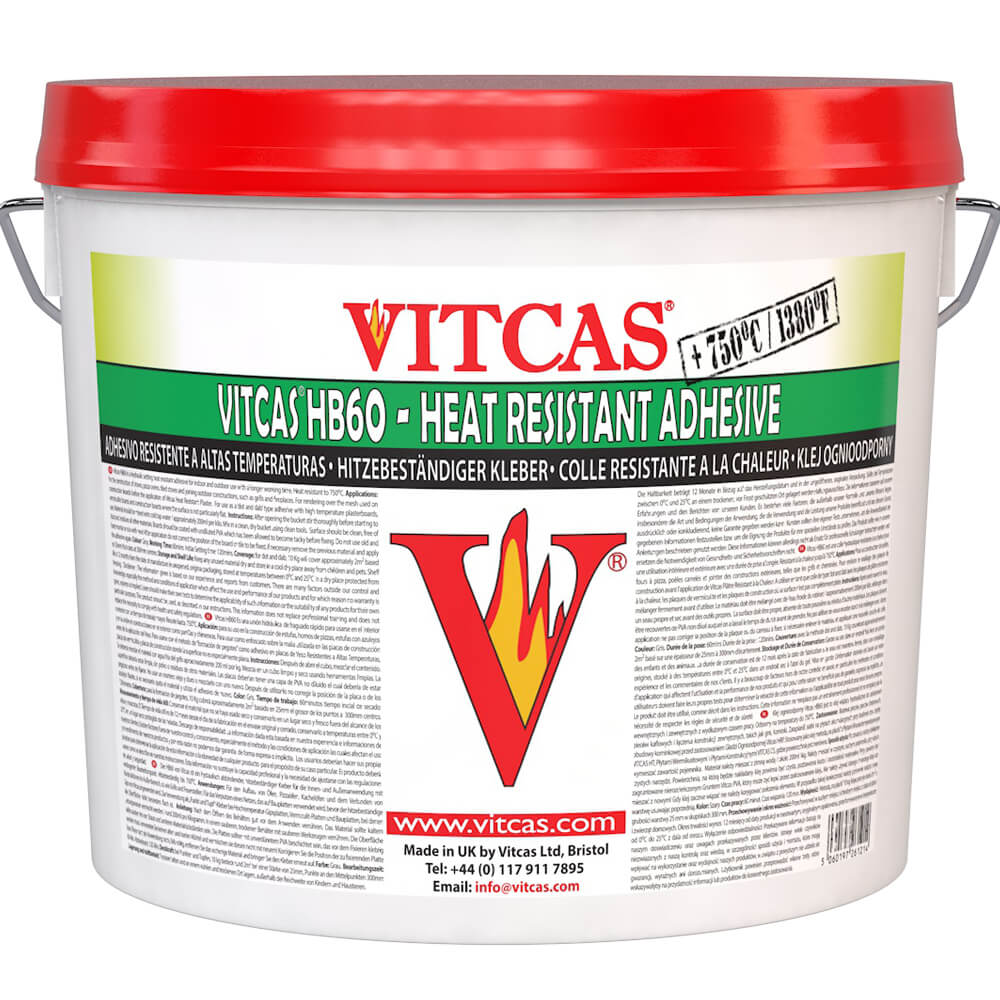
Vitcas HB60 has compatible indoor and outdoor applications, including barbecues and outdoor ovens. Confirm the substrate, tile type, temperature and support requirements for the proposed use. A product name alone does not specify the complete finish.
Assess surface flatness and stability before fitting. Heavy tiles may need suitable support, while corners and interfaces must accommodate the designed movement. Adhesive bonds the tiles; a separate jointing material serves the grout joints.
Record installation and handover requirements
Gather instructions for the adhesive, primer and grout. Establish application conditions, setting time and protection of fresh work. Include drainage of the finished surface in the detail.
Begin heating only after the complete assembly's requirements have been met. At handover, check edges, corners and interfaces with metal components. Retain material identification and substrate photographs. If tiles later detach, these help investigate exposure conditions, surface preparation and joint arrangement rather than simply choosing a stronger-sounding adhesive.