A gap at the enclosure may indicate a joint of elements, a place of movement, or a finish defect. Before using the cartridge, determine its function. The material's properties should be compared with the substrate and geometry, not just the temperature listed on the packaging.
Read the range of the specific paste
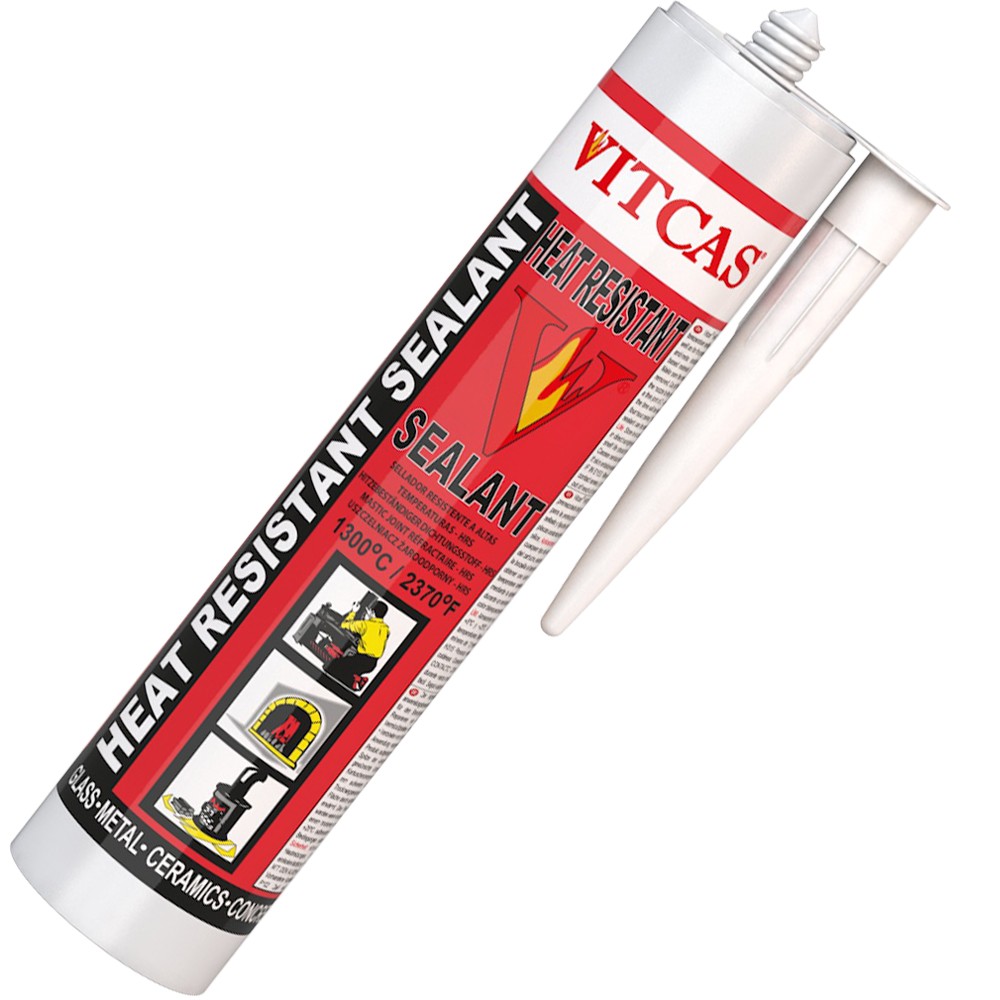
Heat Resistant Sealant 1300 is a Vitcas paste for the described high-temperature-resistant indoor joints. The documentation lists compatible materials and a 2–3 mm layer. Selection should maintain the conditions of the entire part, including the preparation of both surfaces.
Check whether the gap has a consistent geometry and whether the components remain properly supported. A defect resulting from part movement requires identifying the cause. Increasing the thickness of the paste does not replace any missing support or repair of the device mechanism.
Differentiate products in cartridges
Heat Resistant Silicone has separate applications in the respective flexible joints. Do not assign the HRS paste the same function just because of the common word "sealant." Compare each material's datasheet with the requirements of the specific location.
Board Adhesive BA, on the other hand, is an adhesive for specific sheet joints. Not every gap next to a sheet is a place for a general-purpose refractory compound. In construction, bonding, finishing, and details left for movement must be separated.
Inspect the joint before covering
Work on a cold system after preparing the surface according to the instructions. Maintain the required bonding and temperature preparation. Before the final decoration, check access for assessment of the repaired spot and the required device openings.
Record the used variant and the actual thickness of the joint. A photograph before covering will later help distinguish surface cracking from changes in a deeper layer. If the mark returns, compare the condition of the substrate and the movement of parts instead of choosing another paste solely based on higher temperature.