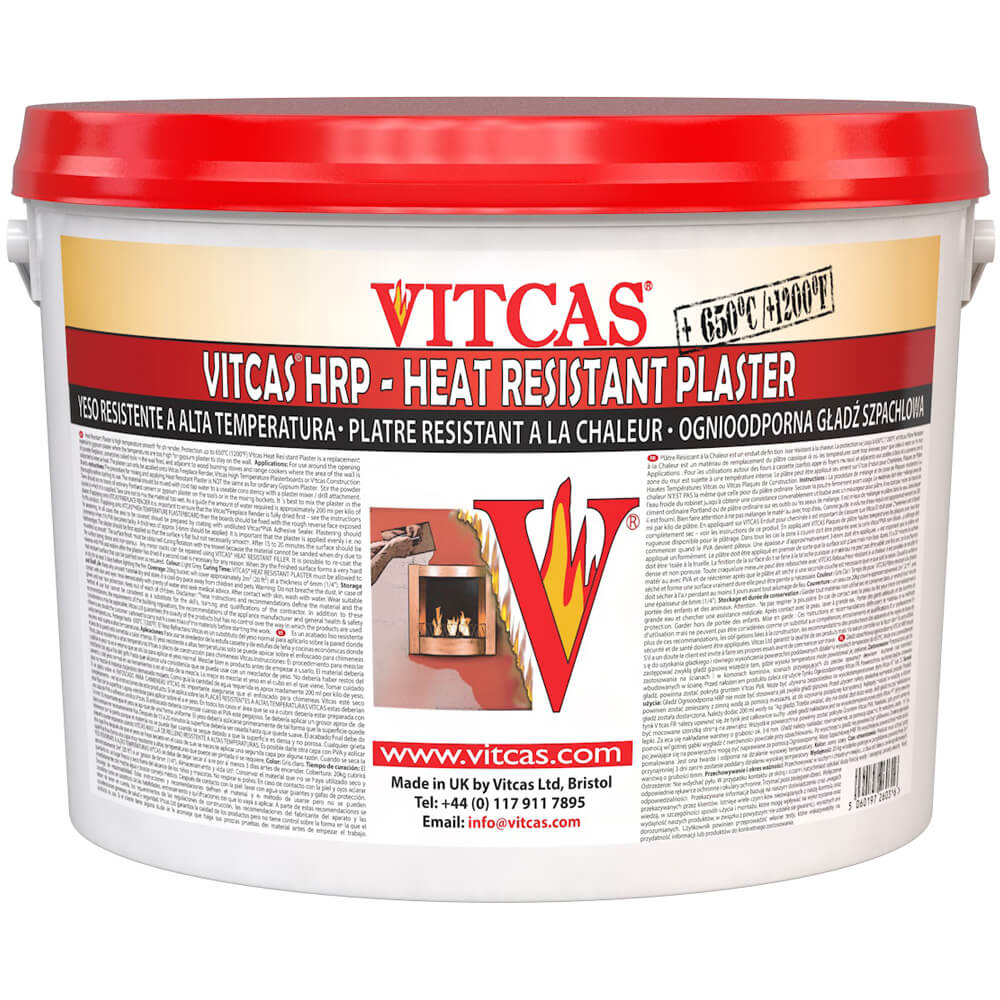
The Heat Resistant Plaster finish should be examined cold before removing stains. A stain, crack and loose fragment do not require the same action. Recognizing the change helps avoid accidental surface damage while trying to restore a uniform appearance around the insert.
Check the surface and its layers
Heat Resistant Plaster creates a smooth layer on the specified substrates. If it is decorated, the cleaning method must also be suitable for the coating on it. Record the finishing material before selecting a cleaning product solely based on the visible wall colour.
View the area from a wider frame and compare it with an older photo. For a crack or delamination, a substrate assessment is needed. Cleaning does not repair a layer that is losing adhesion.
The glass cleaner has its own intended purpose
Vitcas Stove Glass Cleaner is a product for the specific cleaning of the appliance glass. Use it according to the instructions on the correct surface. Do not automatically assume the same compatibility with plaster, paint, sealing, and any adjacent material.
Plan edge protection during cleaning and access to work on the cooled device. Do not judge the method solely by the speed of residue removal. The appearance after the procedure should be compared with the requirements of the actual substrate and product.
Treat the defect as a separate repair
Heat Resistant Filler describes applications with appropriate small corrections, also compatible with HR surfaces. First, determine the stability of the substrate and the cause of the damage. HR documentation does not specify routine sanding of the entire dry layer to restore its appearance.
Record the preparation, surface, and actions performed. Plan the necessary correction with time allocated for the required preparation of materials. During the next inspection, it will be easier to distinguish new contamination from changes in the substrate, without applying additional products to an unrecognized part of the finish.